
Anti-patterns
These are the repeatable ways AI work quietly goes off the rails: fuzzy specs, missing receipts, runaway loops, and systems that forget what they were doing.
Last updated:

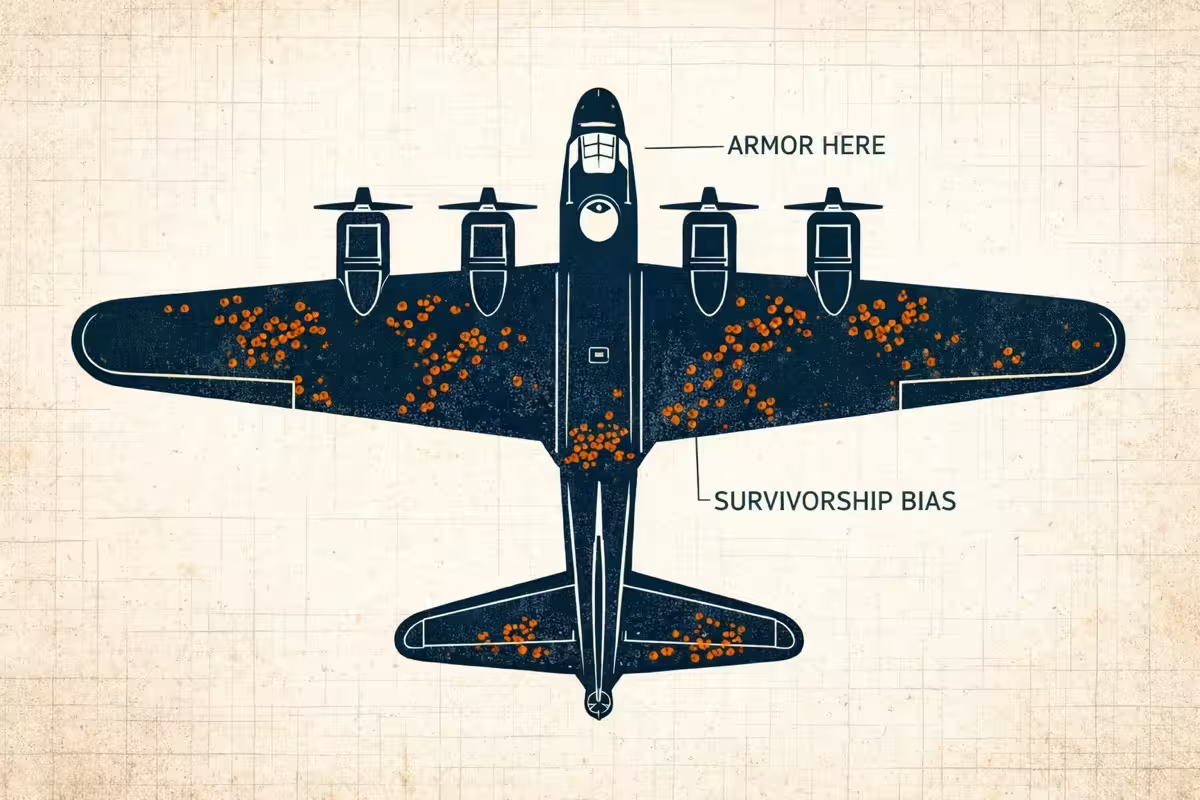
Review gets slippery, the same failure keeps returning under new names, or an agent starts acting faster than the team can audit it.
- Spec is fuzzy: start at Vibes-as-spec.
- Claims lack evidence: start at No receipts, no audit.
- Iterations keep multiplying: start at Infinite loop bias.
- Automation touched something risky: start at Unbounded autonomy.
- Context keeps evaporating: start at Tabula rasa and Identical chrome.
Work that looks finished before it becomes legible
These failures usually surface as ambiguity, hand-waving, or status updates that collapse the moment someone asks for proof.
Vibes-as-spec
No receipts, no audit
Silent failure
Systems that keep moving after human judgment should have stepped in
These are the failures that burn budget, widen blast radius, or force the team to rediscover the same conclusion every time the page reloads.
Context-dump dependency
Infinite loop bias
Unbounded autonomy
Tool spaghetti
Tabula rasa
Interfaces that make the wrong thing easy
These traps come from environment design, permission design, or defaults that quietly push people into avoidable mistakes.
Identical chrome
Paternalistic gating
Common questions
What is the difference between an anti-pattern and a one-off bug?
An anti-pattern is a repeatable behavior that produces predictable failures across projects, not a single implementation mistake.
How should teams use this page during delivery?
Use it as a preflight checklist before risky changes and as a postmortem index when failure signals appear.
Where do the mitigation steps come from?
Every anti-pattern mitigation maps back to patterns and workshop receipts that show the replacement behavior in practice.